
Ventura County, CA

Ventura County
California
Urban | Population: 843,843Ventura County, situated along California’s Central Coast, operates three county jail facilities with a combined average daily population of 1,650 individuals. Like many regions across the country, Ventura faces the urgent challenge of addressing substance use within its correctional system. Between May 2021 and April 2022, more than 1,400 individuals in custody were prescribed medication to manage withdrawal symptoms, which is a clear indicator of the scope and severity of substance use disorder in this population.
In response, the Ventura County Sheriff’s Office launched a comprehensive reentry initiative supported by a 2022 Comprehensive Opioid, Stimulant, and Substance Use Program (COSSUP) grant. This program enhances care across all three correctional facilities by implementing early screening protocols, expanding access to evidence-based medication-assisted treatment (MAT), and bridging the transition from custody to community through housing support and wraparound services.
“This grant program saved my life. In a world where not many get a second chance or get offered help to have guidance, where we had to learn on our own, I received both. Because of them, I have the confidence to advocate for myself and speak up when things are not right. I will forever be grateful for that. The patient navigator and the doctors gave me a voice in a time where I felt like I had become mute and have taught me more about the importance of having support and not being ashamed than I had been shown in my whole life. I am so thankful to them for extending this grant program to me and allowing me a light at the end of my tunnel when it seemed there was no way out.”
—Program participant
Key Components of the Program
Jail-Based Substance Use Disorder Screening and MAT Treatment Services
Ventura County’s Sheriff’s Office has adopted a reentry-focused strategy to address substance use disorder (SUD) among individuals in custody. The approach centers on comprehensive screening and medication-assisted treatment (MAT) to stabilize participants during incarceration and facilitate ongoing care in the community. Most individuals enrolled in jail-based MAT complete DAST-10 screening. The Ventura County Sheriff’s Office COSSUP Grant Administrator along with a New York University researcher (a subawardee recipient) administered the DAST-10 and a modified three-questionnaire instruments to 170 unduplicated incarcerated persons both enrolled in the Jail’s MAT Program and those that were not enrolled in the MAT Program. New York University has published findings on the the abbreviated three-questionnaire instrument compared to that of the ten-questionnaire instrument demonstrating that a reduction in the time spent surveying has not reduced its reliability and validity.
350+
formal assessments conducted by cmh patient navigator in jail
The program provides two FDA-approved MAT options: buprenorphine and methadone. Methadone is available exclusively to those already enrolled in approved treatment programs upon entry. To ensure consistent medication access, Ventura County partners with Aegis, a local provider, for weekly supplies. Licensed Wellpath clinical staff administer medication on-site, maintaining clinical oversight and continuity of care.
Reentry Services
700+
incarcerated people enrolled in mat referred to CMH’s patient navigator program
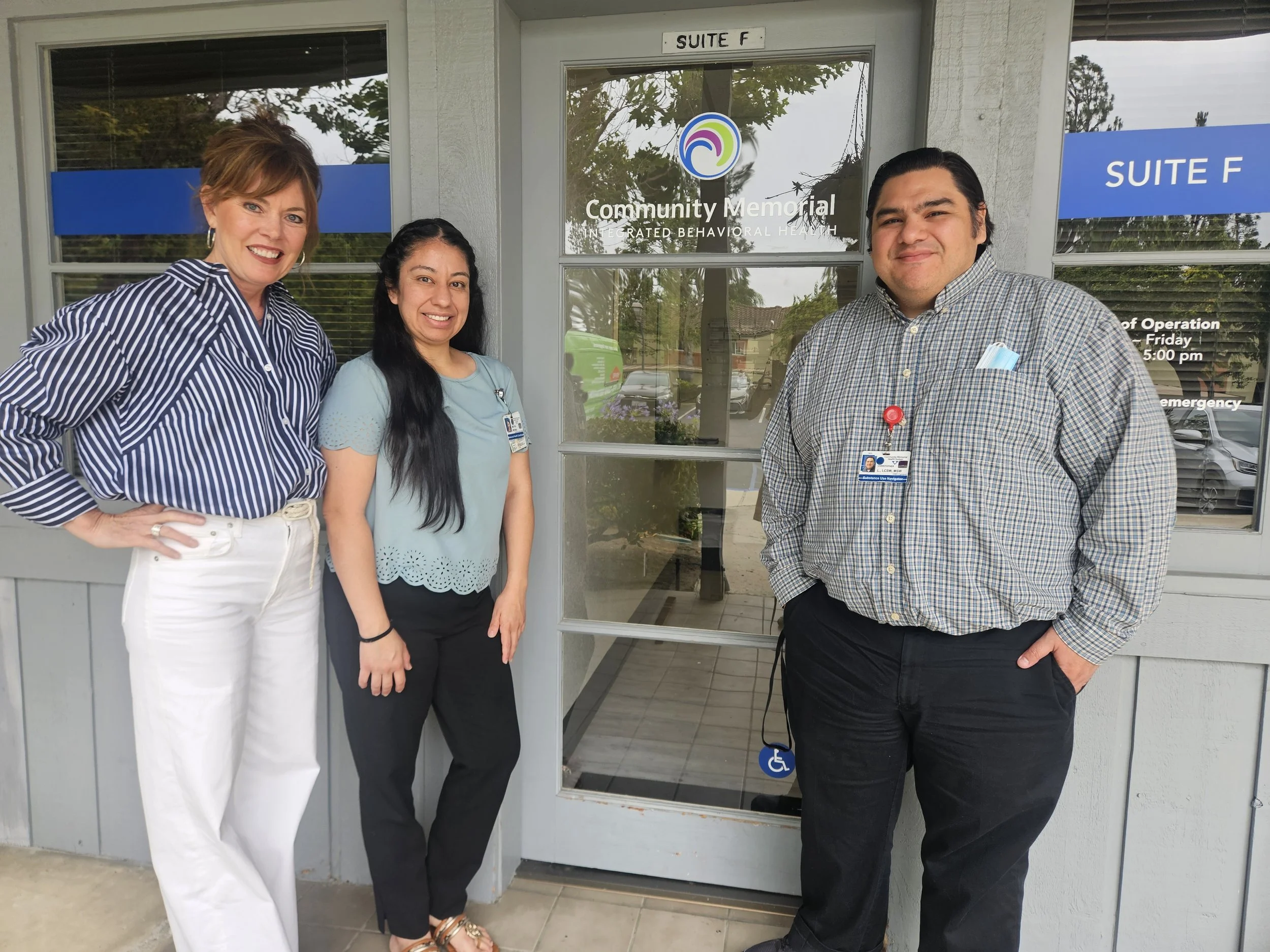
Reentry services in Ventura County focus on individualized, health-centered support to address the underlying causes of recidivism and promote sustained recovery. The initiative targets individuals with a history of substance use who are nearing release and meet specific criteria, such as having health insurance, non-violent offenses, and mild to moderate mental health needs. A patient navigator embedded within the Community Memorial Health System (CMHS) proactively engages participants before release—either in person or via secure telehealth—to establish trust and ensure seamless care transition.
Each participant receives a personalized care plan featuring a warm handoff to an addiction specialist physician for immediate treatment access. The patient navigator conducts weekly check-ins during the first month and biweekly follow-ups through months two and three, while also coordinating mental health referrals through Ventura County Behavioral Health (VCBH) as needed. Support extends beyond incarceration, with the navigator team maintaining regular contact—weekly, monthly, or quarterly—for a minimum of 90 days post-release, tailored to each individual’s needs. Recognizing stable housing as essential to successful reintegration, the patient navigator also assists participants in securing longer-term housing options to reinforce stability and independence.
Community Partners
Ventura County Sheriff’s Office
Community Memorial Health (CMH)
New York University (NYU)
Wellpath - Ventura County Sheriff’s Office Detention Services’ contractor
90+
individuals who participated in cmh’s outpatient program have been welcomed by cmh upon release
20
individuals have successfully reached a 90-day milestone of active participation in cmh outpatient program
Looking Ahead
The county plans to build on these successes by expanding targeted treatment pathways with its community-based partners and preparing for full alignment with California’s CalAIM initiative. This will set the stage for more effective discharge planning and sustained recovery support. With this continued commitment, Ventura County is not only improving individual lives but also creating safer, healthier communities for all. This model demonstrates what’s possible when public health and public safety work hand in hand.
Project Director
Scott Walker, Program Administrator III - COSSUP
Ventura County Sheriff’s Office
scott.walker@ventura.org
(805) 654-2772
This project was supported by Grant No. 15PBJA23GK02258COAP awarded by the Bureau of Justice Assistance. The Bureau of Justice Assistance is a component of the Department of Justice's Office of Justice Programs, which also includes the Bureau of Justice Statistics, the National Institute of Justice, the Office of Juvenile Justice and Delinquency Prevention, the Office for Victims of Crime, and the SMART Office. Points of view or opinions in this document are those of the author and do not necessarily represent the official position or policies of the U.S. Department of Justice.