
ONLINE LEARNING Series
Withdrawal Management in Jail Settings
Many individuals experience withdrawal symptoms shortly after entering jail, as access to substances they were using is suddenly interrupted. During the first hours and days of incarceration, these symptoms can emerge and may range from mild discomfort to life‑threatening complications. With timely recognition and appropriate care, withdrawal can be safely managed, and serious health risks can be reduced.
This page outlines how withdrawal presents in correctional settings, why early detection is essential, and the steps facilities can take to ensure safe, timely care. It highlights common symptoms, potential complications, evidence-based management, and the importance of trained staff and a coordinated response to meet urgent medical needs while supporting better long-term outcomes.
Want to download all resources on this page?
Withdrawal Management in Jail Settings
Video Series
Understanding Substance Use Disorder: The Science
2024 | 14:23 min
Defines SUD as a chronic but treatable medical condition and explains the basic neurobiological pathways involved with the development of SUD.
Watch VideoManaging Substance Withdrawal: A Clinical Necessity
2024 | 10:47 min
Clarifies why it is clinically necessary to address substance withdrawal in jails.
Watch VideoAppearing Unwell: What You Need to Do
2024 | 8:40 min
Explains what it means to appear unwell and why jail staff needs to recognize when an individual appears unwell and know who to alert.
Watch VideoThe Critical Role of Nurses in Managing Substance Withdrawal in Jails
2024 | 14:18 min
Recognizes the role of nurses working in correctional settings play to implement withdrawal management.
Watch VideoSubstance Withdrawal Management in Jail: Pregnancy and Postpartum Care
2024 | 11:38 min
Highlights the importance of caring for individuals who are pregnant.
Watch VideoThe Legal Obligations of Addressing Substance Withdrawal
2024 | 9:04 min
Highlights the legal obligations of addressing substance withdrawal in jail.
Watch VideoWithdrawal Management in Jail Settings
Guiding Documents
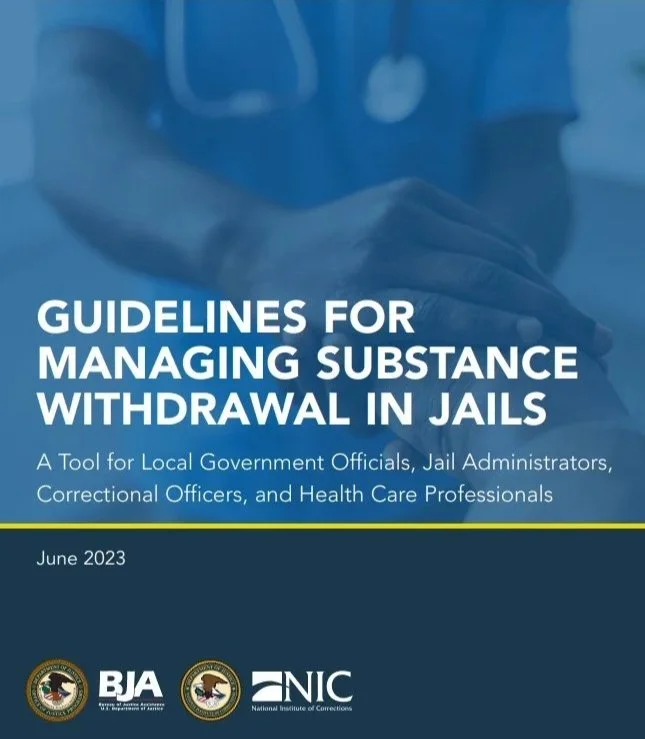
Guidelines for Managing Substance Withdrawal in Jails
In response to the urgent need for withdrawal management policy and protocols, the Bureau of Justice Assistance (BJA) and the National Institute of Corrections (NIC) supported the development and release of Guidelines for Managing Substance Withdrawal in Jails: A Tool for Local Government Officials, Jail Administrators, Correctional Officers, and Health Care Professionals (Guidelines). It is designed to help jails (including detention, holding, and lockup facilities) and communities in providing effective health care for adults (18 years of age and older) who are at risk for or experiencing substance withdrawal and are sentenced or awaiting sentencing to jail, awaiting court action on a current charge, or are being held in custody for other reasons (e.g., violation of terms of probation or parole).
The Guidelines present clinical recommendations and supporting narrative on standards of care for managing withdrawal from alcohol, sedatives, and stimulants, as well as for avoiding or minimizing opioid withdrawal through effective opioid use treatment.

Readiness for Implementation Toolkit
Appreciating that each jail will start at a different place due to its unique circumstances, BJA and NIC developed a Readiness for Implementation Toolkit to help jail administrators, in collaboration with correctional staff, healthcare professionals, and community partners, build on their current efforts to manage substance withdrawal. The toolkit includes an implementation readiness assessment, checklists for jail administrators, healthcare professionals, and local government officials, and an assessment of correctional officers’ training needs.
Withdrawal Management in Jail Settings
Screening Forms
COWS
National Institute on Drug Abuse (nida)
The Clinical Opiate Withdrawal Scale (COWS) is an 11-item scale used to identify common signs and symptoms of opiate withdrawal and monitor these symptoms over time.
CIWA-AR
University of maryland school of medicine
The Clinical Institute Withdrawal Assessment of Alcohol Scale, Revised (CIWA-AR) is a 10-item scale used to measure alcohol withdrawal symptoms.